If you are sourcing custom medical EVA cases, the manufacturer you choose will directly affect how well your equipment is protected in daily use. A reliable supplier not only produces the case, but also understands how different medical or testing devices are handled, stored, and transported in real working conditions. This article explains what to look for, how to compare manufacturers, and what mistakes to avoid, so you can make a more confident and practical decision for your workshop or product line.
Evaluating Medical EVA Case Manufacturers

Manufacturer Experience with Medical Projects
When you choose a manufacturer, you should first check if they have real experience with medical EVA cases, not only general packaging products. Medical diagnostic tools often have sensitive parts and strict handling needs. If a factory lacks this experience, it may design foam only based on shape, not on real usage risk. This can lead to poor protection during transport. A good manufacturer already understands common failure points and will help you avoid design mistakes early in your project.
Engineering Communication Ability
You also need to check how the manufacturer communicates during early development. A strong supplier will ask you detailed questions about your device size, usage flow, and handling environment. This matters because EVA case design is not only about cutting foam, but also about understanding how your team actually uses the equipment. If communication is weak, the final case may look correct on drawings but fail in real operation because key usage details were ignored.
Sample and Design Support Level
Another important factor is how much support you get during the sample stage. A good manufacturer will not only produce a sample, but also help you improve the internal layout. They may suggest changing cavity depth, moving accessories, or improving balance. This kind of input comes from experience and directly reduces design risk. If you skip this support, you may need multiple revisions later, which increases time and cost for your workshop.
Material Quality Standards for Medical EVA Cases
EVA Density and Structural Stability
EVA density decides how the case absorbs shock and keeps its shape over time. If the density is too low, the foam may compress too easily and lose protection after repeated use. If it is too hard, it may create pressure on sensitive parts of your device. In real workshop conditions, stable density ensures that your diagnostic equipment stays protected even after long transport cycles and repeated opening and closing.
Chemical Safety and Clean Usage
In medical environments, material safety is very important. Poor EVA materials may release odor or break down faster under heat and humidity. This can affect both storage conditions and user experience. A reliable manufacturer should use stable EVA compounds that remain safe during long-term use. This is especially important when your devices are used in clinics or laboratories where clean handling and stable storage conditions are required every day.
Long-Term Durability Performance
Durability is not only about one-time impact protection but also repeated use over time. In your workshop, EVA cases are often opened, closed, and transported many times. If the material weakens too quickly, internal movement will increase, and protection will drop. Good EVA material keeps its structure stable even after long cycles of use, which helps you reduce maintenance issues and ensures consistent protection for your 医療機器.
Work With a Trusted Medical EVA Case Manufacturer
Customization Capabilities Comparison

Internal Foam Engineering Design
カスタマイズ is more than just cutting shapes into foam. A strong manufacturer should understand how to design internal structures based on the device’s function. 例えば, they should know where pressure should be reduced or where stability is needed. This matters because poor layout design can create movement inside the case, even if the foam fits the shape correctly. Good engineering design improves both protection and usability in your daily operations.
Multi-Device Layout Handling
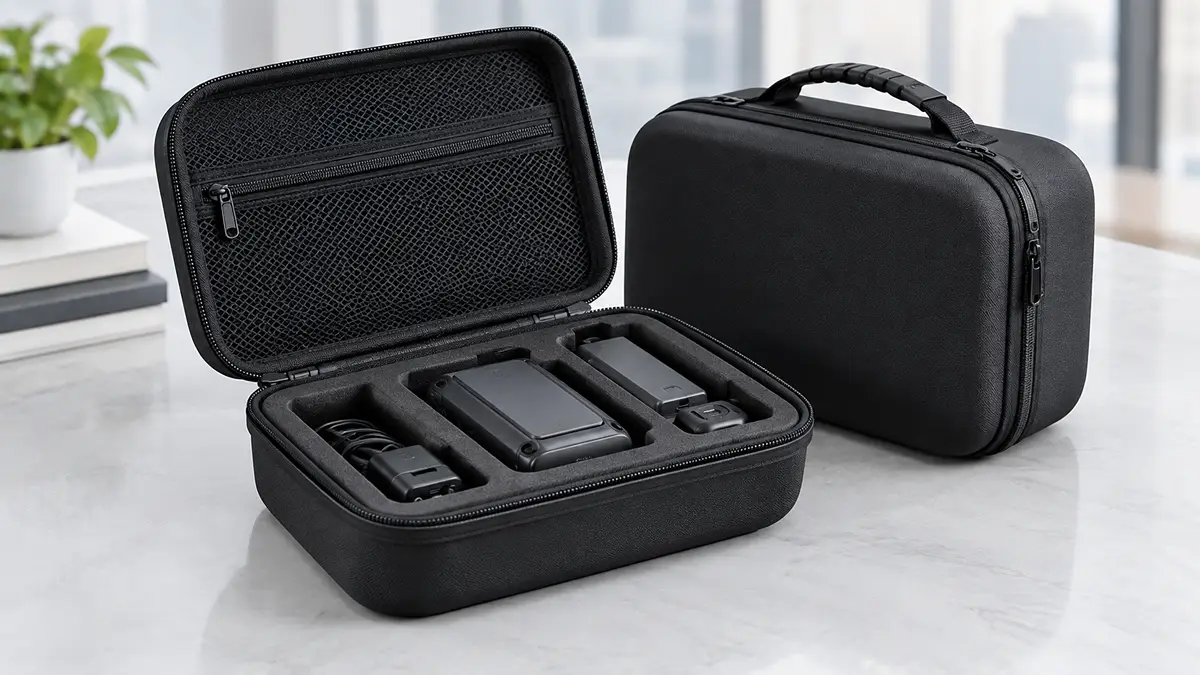
Many medical kits include more than one device or accessory. You need a manufacturer who can design complex layouts that separate each item properly. If everything is placed without structure, tools may collide or become difficult to access. A good layout improves workflow in your workshop or field use, allowing your team to quickly find and return items without confusion or delay during operation.
Branding and External Customization
You should also check whether the manufacturer can support branding needs such as logos, 色, or surface finishing. While this does not affect protection directly, it improves product identity and professional appearance. In medical environments, branded EVA cases also help your equipment look more organized and reliable when used in hospitals, 研究室, or field testing situations.
Prototyping Speed and Development Cycle
Sample Production Speed
Prototype speed is important because it directly affects your project timeline. If a manufacturer is slow, your product launch or internal testing schedule may be delayed. A strong factory can quickly turn drawings into physical samples using stable cutting systems. Fast response also shows that the manufacturer has experience handling similar medical EVA case projects and understands how to move from design to production efficiently.
Revision and Optimization Process
After you receive the sample, changes are usually needed. A good manufacturer should be able to adjust foam layout, depth, or structure based on your feedback. This process should be smooth and fast because multiple delays can slow down your entire project. In real workshop development, strong revision ability helps you reach a final usable design without unnecessary production cycles or repeated testing.
Fit Testing with Real Devices
The most important step in prototyping is testing the actual device inside the case. You should ensure the manufacturer supports full fit testing, not just theoretical design checks. This helps confirm whether the foam holds the device properly, without pressure or movement. In real use conditions, this step prevents issues that may only appear during transport or daily handling in your workshop.
MOQ and Pricing Considerations

Minimum Order Quantity Flexibility
MOQ is an important factor when starting a medical EVA case project. Some manufacturers require high minimum orders, which may not fit early-stage testing needs. Flexible MOQ allows you to test design quality before large production. しかし, you should still check whether small batches maintain the same material quality and production accuracy as larger orders, especially for sensitive medical equipment applications.
Cost Structure Transparency
You should always understand how pricing is calculated. Costs usually depend on material type, foam complexity, cutting method, and assembly work. If pricing is unclear, you may face hidden costs later in production. A transparent cost structure helps you plan your budget more effectively and avoid unexpected increases during later stages of your EVA case development process.
Balance Between Price and Performance
In medical EVA case production, price should not be the only decision factor. Lower cost may sometimes mean weaker materials or limited engineering support. This can affect long-term protection performance. A better approach is to balance cost with durability, usability, and design quality. In real applications, a slightly higher investment often results in better long-term protection for your equipment.
Required Certifications and Compliance
Material Safety Compliance
Certifications such as RoHS or REACH confirm that EVA materials meet safety standards. This is important because your equipment may be used in controlled medical environments. Safe materials reduce risk and ensure stable performance over time. Without proper compliance, there may be concerns about material stability or safety during long-term storage and transport of your diagnostic tools.
Quality Management Systems
Factories with systems like ISO 9001 usually have more stable production processes. This means they follow clear quality control steps in every stage of production. For your workshop, this reduces the risk of inconsistent foam quality or structural defects. A certified system ensures that each EVA case meets the same production standard across different batches.
Documentation and Traceability
Good manufacturers should provide full documentation for materials and production processes. This is important for medical supply chains where traceability is required. If any issues appear later, you can track materials and production steps easily. This level of control improves trust and makes it easier for your business to work with regulated markets or large institutional buyers.
Factory Capability and Reliability

Production Equipment and Precision
The quality of EVA cases depends heavily on cutting precision and equipment level. CNC machines and stable lamination processes ensure that foam fits your device correctly. If cutting accuracy is low, even a good design will fail in real use. For your workshop, precision directly affects how well the case protects your equipment during transport and daily handling.
Production Capacity and Consistency
You should also evaluate whether the factory can handle both small and large orders without quality changes. Some suppliers can produce samples well but fail in mass production consistency. A reliable manufacturer keeps the same quality across all batches. This is especially important when your medical equipment needs a stable packaging supply for long-term production plans.
Communication and Delivery Reliability
Reliable factories respond quickly and clearly during production. This helps you avoid misunderstandings and delays. In real projects, communication speed is often as important as production capability. If a factory can update you regularly and solve issues quickly, your project will run more smoothly and reduce risks in delivery timelines.
よくある質問
What is the most important factor when choosing a manufacturer?
Material quality and engineering ability are the most important factors. You need a manufacturer who understands both protection performance and the real usage conditions of medical equipment.
How can I check manufacturer reliability?
You can check certifications, sample quality, communication speed, and past project experience. These give you a clear view of whether the supplier is stable and professional.
Is low MOQ always better for testing?
Not always. Low MOQ is helpful for prototypes, but quality and consistency must still match real production standards. Otherwise, testing results may not reflect final performance.
How long does development usually take?
Most medical EVA case projects take about 7–20 days, depending on design complexity and revision cycles.
Can manufacturers help improve design?
はい. Strong manufacturers often provide suggestions to improve layout, protection structure, and usability based on real device experience.
最終的な考え
When you work with medical EVA case suppliers, what really matters is how well they can turn your requirements into stable and reliable production results, not just how the product looks or how low the price is. Differences in material control, customization ability, prototyping speed, and factory consistency will directly affect how well your equipment is protected in real use over time.
で キンフィッシュケース, we focus on designing and manufacturing EVA cases that fit the real handling needs of medical and testing equipment. We support your project from early design discussion to final mass production with stable quality control and practical engineering input. If you are planning a new medical EVA case project, 今すぐご連絡ください, and let’s build a solution that fits your application.